There's a jar in my kitchen that cost less than $5 — and I've been quietly stirring it into warm water every single morning.
It's not a supplement. It's not a superfood powder with a sleek label. It's blackstrap molasses — the dark, thick syrup left behind when sugar cane is processed — and the more I've researched it for perimenopause, the more I've realized that the cheapest things are sometimes the most powerful.
I'm not here to oversell this. I'm here to show you what it actually contains, what that means for your perimenopausal body specifically, and how to use it in a way that makes sense — including the morning tonic recipe I've made part of my daily ritual.
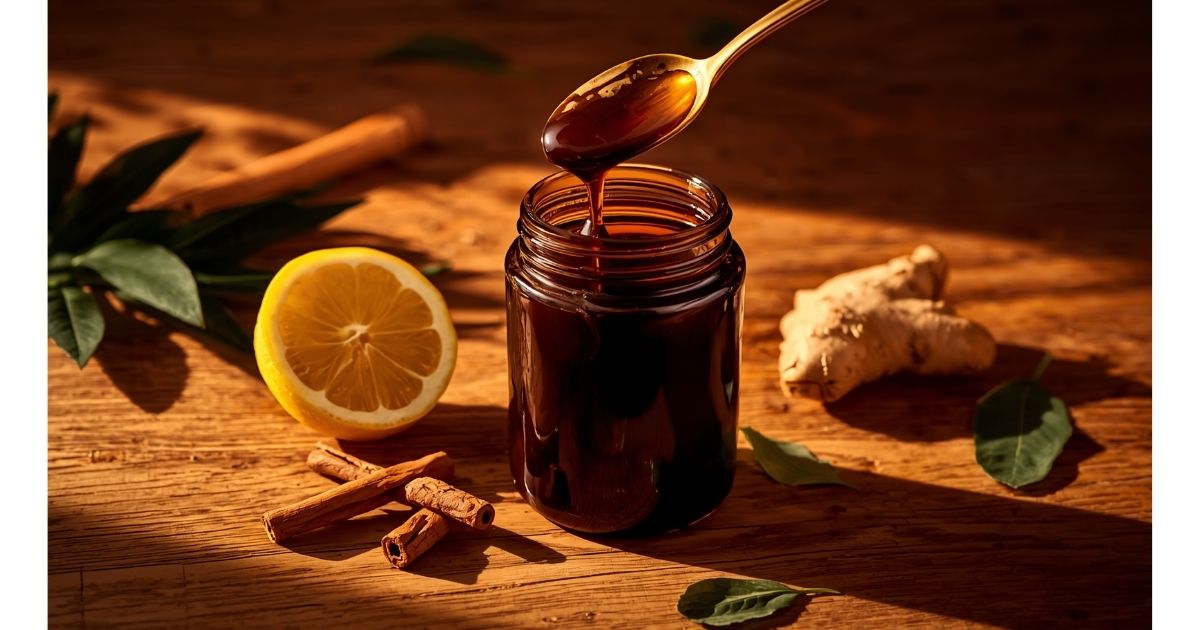
Blackstrap molasses — the mineral-rich byproduct of sugar refining that generations of women have relied on.
What IS Blackstrap Molasses, Really?
Blackstrap molasses is the third and final by-product of the sugar refining process. When sugar cane juice is boiled three times to extract crystallized sugar, what remains is a thick, dark, slightly bitter syrup — stripped of sweetness but concentrated with minerals.
Think of it this way: all the nutrition that the sugar refining process removes from white sugar gets concentrated and left behind in blackstrap molasses. It's the nutritional shadow of sugar — and for us in perimenopause, that shadow is exactly what we need.
Unlike regular molasses or "fancy" molasses (which come from the first or second boiling), blackstrap is the most nutrient-dense form. It's also less sweet, which matters when we're talking about blood sugar sensitivity during perimenopause.
Quick buying tip: Look for unsulfured, organic blackstrap molasses. Unsulfured means no chemical preservatives; organic means the sugar cane wasn't sprayed with pesticides. These are the two non-negotiables when choosing your brand.
Heavy, irregular periods deplete iron faster than most realize. Low iron = fatigue, brain fog, breathlessness — often blamed on "just hormones."
Cortisol burns through magnesium. As stress rises in perimenopause, magnesium depletion disrupts sleep, mood, muscle tension and estrogen metabolism.
Estrogen decline accelerates bone density loss. Food-source calcium like this absorbs better than most calcium carbonate supplements.
Eases bloating, supports heart function and blood pressure — all priority areas as estrogen drops.
Directly involved in serotonin and dopamine synthesis. Perimenopausal mood shifts are partly a B6 and magnesium story.
Supports bone metabolism alongside calcium, and plays a role in estrogen metabolism pathways.
Values are approximate per 1 tablespoon (20g) of unsulfured blackstrap molasses. Exact amounts vary by brand and source.
The Mechanism: Why This Matters for Your Perimenopausal Body
The mechanism isn't magic — it's mineral replenishment. Perimenopause is, in part, a story of nutrient depletion. Heavy cycles drain iron. Cortisol burns through magnesium. Estrogen decline creates calcium demand. Blackstrap molasses is one of the rare foods that addresses several of these depletions simultaneously, in bioavailable form, from a single inexpensive ingredient.
Each nutrient in blackstrap molasses connects directly to a documented perimenopause complaint. Iron addresses the fatigue and brain fog that are so often dismissed as "just part of it." Magnesium speaks to the disrupted sleep, the heightened anxiety, the tension your body holds. Calcium works quietly in the background, supporting the bones your estrogen used to protect. B6 and potassium round out the picture — mood support and cardiovascular care in one dark, slightly bitter spoonful.

The Morning Molasses Tonic — iron, magnesium, calcium and Vitamin C in one warm cup.
What Does the Evidence Actually Say?
Let's be honest with ourselves here — this is a wellness space, not a pharma company, and your trust matters more than hype.
What we know with confidence:
Iron deficiency is highly prevalent in perimenopausal women, particularly those with heavy or prolonged bleeding. Supplementing with dietary iron sources reduces the fatigue and cognitive impairment associated with low ferritin levels. Magnesium deficiency is strongly associated with insomnia, anxiety, and increased symptom severity during perimenopause — and multiple studies have found that magnesium support reduces that burden. Calcium from food sources has superior bioavailability compared to many calcium carbonate supplements and contributes meaningfully to bone density maintenance.
What is still emerging:
There is no large-scale clinical trial specifically studying blackstrap molasses as a perimenopause intervention. What exists is solid nutritional science about the individual minerals it contains, combined with a long history of traditional use. That's meaningful context — not a clinical proof, but not nothing either.
The honest bottom line: Blackstrap molasses isn't a cure. It's a nutrient-dense food that addresses documented deficiencies common in perimenopause. Think of it as a daily deposit into your mineral bank account — not a quick fix, but a consistent, affordable investment in how you feel.
How to Use It: Practical Application
How much and when
1–2 tablespoons per day is the most widely used therapeutic dose in traditional practice. Start with 1 tsp and build up to 1 tbsp over one to two weeks if your digestive system is sensitive — blackstrap can have a mild laxative effect in higher doses for some women.
Morning works best for most women. Taking it with warm water and lemon means your body uses the iron and magnesium throughout the day. Some women prefer it in warm plant milk before bed — the magnesium and calcium create a gentle sleep-support ritual, similar in spirit to a golden milk.
The pairing that makes all the difference
Always take blackstrap molasses with a Vitamin C source — lemon juice, orange, bell pepper — as Vitamin C significantly enhances iron absorption. This pairing isn't optional if iron is one of your goals. Conversely, avoid taking it alongside coffee or tea — the tannins block iron absorption. Wait at least 30–60 minutes before or after.
Who This Is Specifically For
✓ May be especially helpful if you…
- Have heavy, irregular periods with noticeable fatigue
- Experience disrupted sleep, muscle cramps or heightened anxiety
- Want food-based support for bone density
- Are managing constipation (common in perimenopause)
- Want an affordable, daily mineral ritual
⚠ Check with your doctor first if you have…
- Hemochromatosis (iron overload disorder)
- Diabetes or closely managed blood sugar
- Anticoagulant therapy (warfarin/Coumadin)
- Kidney disease with potassium restriction
- Existing digestive sensitivities
Your Grandmother Already Knew
Before iron supplements came in little orange bottles, before magnesium came in powder packets — women in Caribbean households, Southern American homes, and West African traditions were drinking blackstrap molasses as a daily tonic. It was given to children for growth, to pregnant women for iron, to the elderly for energy and joint support.
In many cultures, it was as natural and unremarkable as drinking water with lemon. The irony is that in our race toward modern supplementation, we often bypass foods that have provided the same minerals in bioavailable, food-matrix form for centuries.
The women who passed this knowledge down weren't wrong. They just didn't have clinical trial numbers to back them up. They had results — and generations of women who felt better.
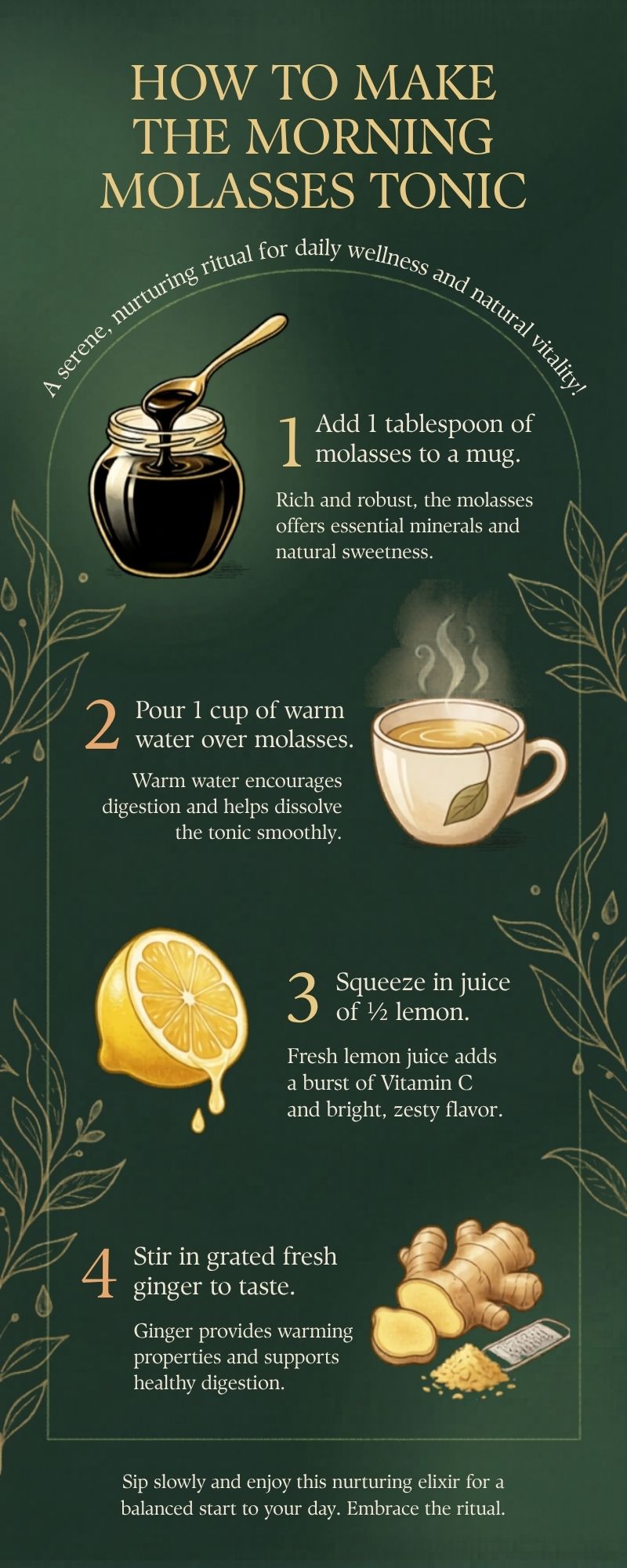
The Morning Molasses Tonic — a 90-second daily ritual for mineral support.
The Interaction Layer: What to Pair It With (and What to Avoid)
Works beautifully with: Vitamin C (lemon juice, orange, citrus) for iron absorption; warm water or plant-based milk; cinnamon for blood sugar stabilization; ginger for gut motility and anti-inflammatory support.
Competes with: Coffee and tea (tannins block iron); calcium supplements taken at the exact same time as iron-rich foods — space these 1–2 hours apart; high-fibre meals immediately after, as fibre can bind minerals.
Synergizes with other gut health practices: If you're already working on your gut microbiome, the prebiotic properties of molasses can support beneficial bacteria — making it a natural fit within a broader gut health protocol.
The Ritual That Grounds You
There's something quietly powerful about returning to an old remedy. In perimenopause, so much feels out of control — the irregular cycles, the sleep disruptions, the moods that arrive uninvited. There can be a real comfort in having a ritual that costs almost nothing, that your ancestors understood intuitively, and that asks only that you stir a spoonful into warm water every morning.
It's not a cure. But it's a choice. A daily, deliberate act of nourishment for a body that is working very hard. That matters too. 🌿
The Morning Molasses Tonic
- 1 tablespoon unsulfured organic blackstrap molasses
- 1 cup warm water (not boiling — around 65°C / 150°F preserves nutrients)
- Juice of ½ lemon (essential — boosts iron absorption via Vitamin C)
- ¼ tsp ground ginger (anti-inflammatory, gut support)
- ¼ tsp ground cinnamon (blood sugar stabilization)
- Optional: pinch of cayenne for circulation
- Heat water until warm but not boiling
- Stir in blackstrap molasses until fully dissolved
- Squeeze in lemon juice
- Add ginger and cinnamon — stir well
- Sip slowly, ideally 30–60 minutes before coffee
- Blackstrap molasses is a food — but its concentrated mineral content can interact with certain health conditions
- Avoid if you have hemochromatosis (iron overload)
- Factor into daily carbohydrates if you're managing diabetes or insulin resistance (~10g sugar per tbsp)
- Check with your doctor if you're on blood thinners or have kidney disease
- Start with 1 tsp and build up slowly to avoid loose stools
- Always choose unsulfured, organic blackstrap — not regular molasses
This article is nutritional education, not medical advice. Please consult your healthcare provider before making significant changes to your diet, especially if you are managing a health condition.
Ready to Try It?
If you make the Morning Molasses Tonic, I want to know how it goes. Come find me on Instagram and TikTok — I'll be sharing how I use it in real time. And if you're looking for deeper support through your hormonal transition, explore the full Healthy Habits With You resource library.
Explore More Resources →